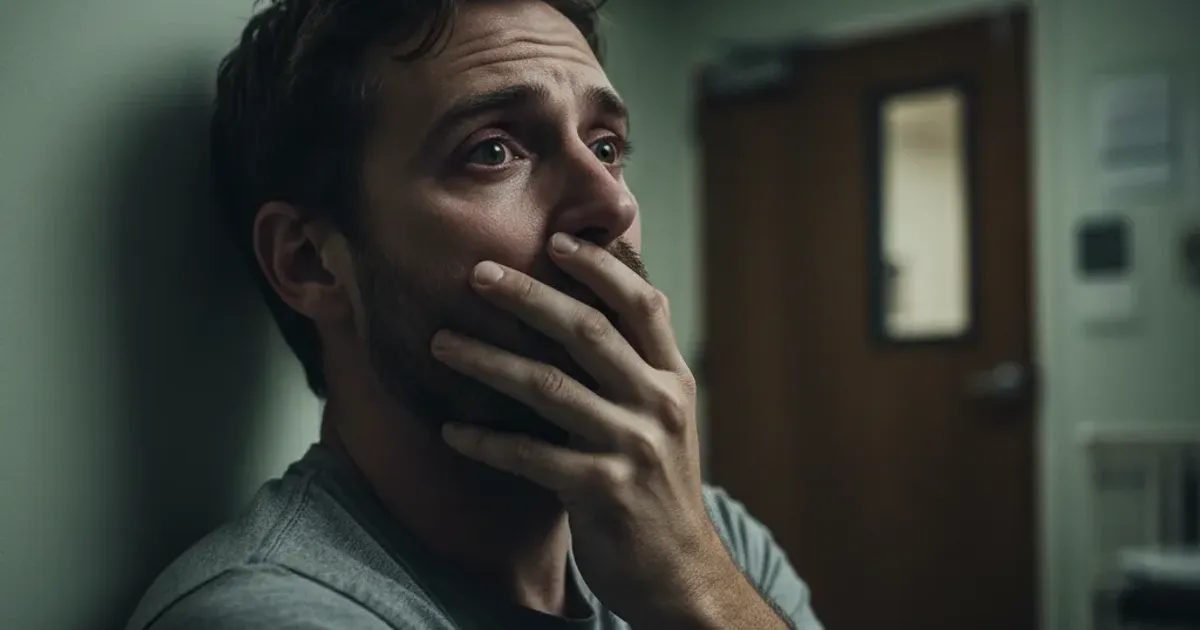
The Helpless Witness: Navigating Your Own Trauma After Your Partner's Difficult Birth

Written by
Phoenix Health Editorial Team
Expert health information, double-checked for accuracy and written to be helpful.
Last updated
Written by
Phoenix Health Editorial Team
Expert health information, double-checked for accuracy and written to be helpful.
Last updated
You Weren't the Patient, But You Were Still in the Room
All the attention after a difficult birth naturally goes to the person who gave birth and the new baby. Their physical and emotional recovery is paramount. But in the process, another person's experience is often completely overlooked: yours. You were there, too. You saw the medical emergency unfold. You heard the alarms. You felt the terror in the room. You watched the person you love in agony or fear for their life. And you were powerless to stop it.
Feeling helpless while witnessing a loved one's traumatic experience can be deeply traumatizing in its own right. If you are a partner who is struggling with memories of a difficult birth, your feelings are real, valid, and deserving of attention. Ignoring your own trauma not only harms your well-being but can also create a barrier to supporting your partner and bonding with your new child. Understanding and addressing your experience is a critical part of your family's recovery from .
The Overlooked Trauma of the Birth Partner
Society places immense pressure on non-birthing partners, often fathers, to be the unshakable rock of support. You're expected to be strong, calm, and focused on your partner's needs. This leaves very little room for you to have your own emotional response, let alone a traumatic one. Many partners feel intense guilt or shame for having their own struggles, believing their pain is insignificant compared to what the birthing person went through.
Why Your Feelings Are Valid, Too
Trauma is not a competition. Your experience does not diminish your partner's. In fact, it's intertwined with it. The fear you felt for their safety and your baby's safety was real. The helplessness was real. The horror was real. Acknowledging your pain is not selfish; it's a necessary step toward healing for your entire family.
What is Secondary Traumatic Stress (STS)?
Secondary tic Stress, also known as vicarious trauma, is the emotional distress that results from hearing about or witnessing the traumatic experiences of others. It is a very real response for partners, first responders, and therapists.
Understanding Vicarious Trauma
When you have a deep emotional connection to someone, witnessing their trauma can feel like it's happening to you. Your brain processes the and danger in a similar way. You may not have the physical scars, but the psychological wounds can be just as profound.
Common Triggers for Partners During a Difficult Birth
- Seeing your partner in extreme, uncontrollable pain.
- An emergency C-section where your partner is rushed away. This is a known cause of .
- The baby being born unresponsive or needing immediate resuscitation.
- A postpartum hemorrhage or other life-threatening medical complication for your partner.
- Feeling ignored or dismissed by medical staff when you tried to advocate for your partner.
Signs You May Be Experiencing Birth Trauma as a Partner
The symptoms of secondary trauma often mirror the symptoms of PTSD in the person who experienced the event firsthand.
Intrusive Thoughts and Memories
You might have unwanted, vivid flashbacks of the most frightening moments. You may find yourself replaying the event in your mind, unable to stop. Nightmares about the are also common.
Avoidance and Emotional Numbing
You may try to avoid talking or thinking about the birth. Some partners throw themselves into work or other distractions. You might feel emotionally numb or detached, therapy for birth trauma it hard to feel joy or connect with others.
Increased Anger, Irritability, and Protectiveness
You may feel a constant, simmering anger about what happened. This can lead to increased irritability and conflict in your relationships. Often, this is coupled with a feeling of intense, almost frantic, protectiveness over your partner and new baby, a state of that feels like you can never let your guard down.
Feeling Disconnected from Your Partner and Baby
Trauma can create an emotional wall. You might feel distant from your partner, unable to connect with her about the shared experience because your perspectives were so different. Some partners also struggle to bond with the baby, as the infant is a constant reminder of the traumatic event.
The Partner's Dilemma: Supporting Them While You're Struggling, Too
This is one of the most difficult parts of being a traumatized partner. How can you be the rock your family needs when you feel like you're crumbling inside?
The Pressure to Be the "Strong One"
Suppressing your own feelings to appear strong is a short-term strategy with long-term consequences. Unprocessed trauma doesn't disappear; it often resurfaces as anger, anxiety, or withdrawal, which can be confusing and hurtful to your recovering partner.
Why Your Unprocessed Trauma Can Hinder Your Partner's Healing
If you are avoiding reminders of the birth, it may prevent your partner from talking about her experience when she needs to. If you are irritable and anxious, it can make the home environment feel tense and unsafe. Your healing and your partner's healing are deeply connected. Often, the birthing person's trauma is also , which can create a confusing dynamic where both partners are struggling silently.
How to Heal Together After a Traumatic Birth
Healing doesn't mean forgetting what happened. It means processing the memory so that it no longer has power over your present life.
Step 1: Open, Non-Judgmental Communication
Find a calm moment to talk to your partner. Start by acknowledging her experience, and then, when it feels right, share yours. Use "I" statements, such as, "I was so terrified when..." The goal is not to compare pain, but to create a shared understanding that you were both impacted.
Step 2: Seek Individual Therapy to Process Your Own Experience
You may benefit from having your own space to process what you witnessed without the fear of burdening your partner. A therapist can you work through the feelings of helplessness and fear and give you tools to manage your trauma symptoms.
Step 3: Consider Couples Counseling to Reconnect
A traumatic birth can create a rift in a relationship. A couples counselor who specializes in perinatal health can help you navigate this difficult time, improve your communication, and find ways to reconnect and support each other's healing.
Finding Your Footing as a Family
Addressing your own trauma is one of the most important things you can do for your family.
Processing the Event to Be Present for the Future
When you process the trauma, you free yourself from being stuck in the past. This allows you to be more present, patient, and emotionally available for both your partner and your new baby.
How Your Healing Supports Your Whole Family
When you get help, you model healthy coping for your family. You show that it's okay to be vulnerable and that seeking help is a sign of strength. Your healing is a gift not only to yourself but to everyone you love.
You don't have to be just a witness to the trauma; you can be an active participant in the healing. Schedule a free, confidential consultation with a Phoenix Health care coordinator to find the right support for you and your family.
Frequently Asked Questions
- Yes. Partners who witnessed medical emergencies, feared their partner or baby was dying, or felt helpless during a traumatic birth can develop genuine PTSD. This is documented in research and clinically recognized — it is not dramatizing or overclaiming.
- Intrusive memories of the birth, nightmares, avoidance of reminders (hospital environments, birth-related discussions), emotional numbing, hypervigilance, and difficulty connecting with the baby or partner postpartum. These are PTSD symptoms in a partner.
- Because all attention rightfully goes to the person who gave birth. Partners internalize the expectation that their experience doesn't count. This suppression of a genuine trauma response delays recovery and can affect the relationship for years.
- Yes — ideally with some care about timing and framing. Not in the acute postpartum period when they are overwhelmed with their own recovery, but at a point when both of you have some capacity. A therapist can facilitate this conversation if needed.
- The same as any PTSD: EMDR has the strongest evidence, trauma-focused CBT is also effective. Our article on partner trauma after difficult birth explains the experience and available support.
- Indirectly — a partner with untreated PTSD may be less available, more reactive, or more avoidant, which affects the co-parenting dynamic and the home environment. Treating partner trauma is part of protecting the family system.
Ready to get support for Birth Trauma?
Our PMH-C certified therapists specialize in Birth Trauma and can typically see you within a week.
Not ready to book? Dr. Emily writes a short email series on Birth Trauma, honest and practical, from a PMH-C therapist who's been through it herself.
No spam · Unsubscribe anytime