Why Can't I Sleep When the Baby Sleeps? A Guide to Postpartum Insomnia

Written by
Expert health information, double-checked for accuracy and written to be helpful.
Last updated
Written by
Expert health information, double-checked for accuracy and written to be helpful.
Last updated
Postpartum insomnia driven by anxiety is distinct from ordinary new-parent fatigue: it is a state in which your nervous system stays on high alert even when the baby is asleep and your body is exhausted. Postpartum Support International estimates that up to 20% of new mothers experience postpartum anxiety, and sleep disruption caused by hypervigilance is one of its most physically damaging symptoms. You finally lie down, and your brain runs a checklist. Is the baby breathing? Did you forget something? What if something goes wrong? The worry loop keeps you awake, and the sleep deprivation makes the anxiety worse the next day. Cognitive behavioral therapy for insomnia, known as CBT-I, adapted for the postpartum period, is the most evidence-based non-medication treatment for this pattern. A licensed perinatal therapist can help you quiet the alarm system in your nervous system so sleep becomes possible again, not just when you collapse from exhaustion.
Why You Can't Sleep When the Baby Sleeps
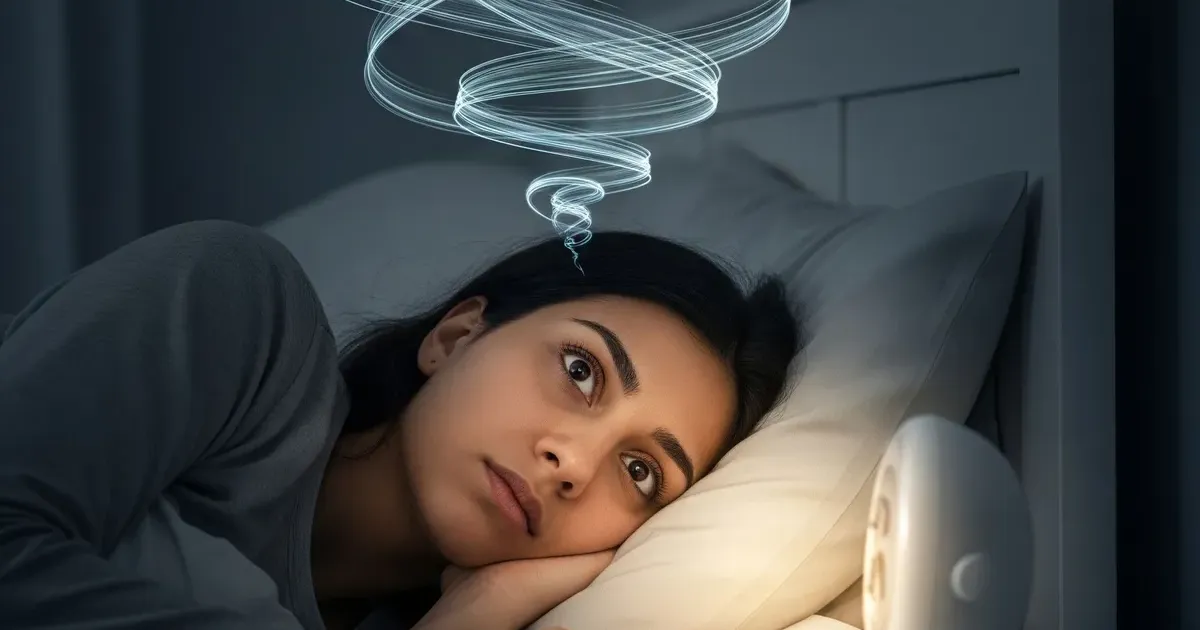
You've been told to "sleep when the baby sleeps." You know you need rest. You're exhausted in a way that goes to your bones. But when the house goes quiet and the baby finally drifts off, you lie there, heart racing, mind running, and sleep won't come.
This isn't a failure of effort or time management. It's postpartum insomnia, and it's common, well-understood, and treatable.
Postpartum Insomnia Is Not the Same as Sleep Deprivation
These two things feel similar but aren't the same. Sleep deprivation means you don't have the chance to sleep, nearly every new parent experiences that. Insomnia means you can't sleep even when you have the chance. That's a different problem, and it deserves a different response.
When you hear "just sleep when the baby sleeps" and your body refuses to cooperate, it's easy to feel like something is wrong with you. Nothing is wrong with you. Your brain has entered a state where the ability to sleep has come apart from your body's need for it. That's a medical condition, not a personal failing.
Many new mothers describe it the same way: bone-tired, but wired. Exhausted, but unable to relax. The mind won't stop. Even in the dark and quiet, it keeps going.
The Anxious Mind at 3 AM
At the center of postpartum insomnia is usually postpartum anxiety. The racing thoughts that keep you awake aren't vague or random. They're focused, specific, and relentless.
You might find yourself checking the baby monitor every few minutes. You might be running through every possible danger, googling symptoms at 2 AM, lying still while your mind runs worst-case scenarios. This is sometimes called "doom scrolling" your newborn, and it comes from deep love, not weakness.
These fears are also isolating. Many mothers are afraid to say them out loud. They worry that admitting they can't turn off their brain means they're failing somehow. They're not. These thoughts are a known symptom of postpartum anxiety, not a sign of bad motherhood.
Some of the most common feelings mothers describe:
- "I can't turn my brain off." The mind won't switch off, even when you're completely exhausted.
- "I have a constant sense of dread." That background feeling makes it impossible to relax, especially at night.
- "I feel like a failure as a mom." This feeling is a symptom of distress, not a reflection of your actual ability.
- "I'm having scary thoughts." Intrusive or frightening thoughts are a known symptom of postpartum anxiety and OCD. They don't make you a bad person.
Why This Happens: The Biology of Postpartum Sleep
Postpartum insomnia doesn't come from one cause. It comes from several things happening at the same time.
The Hormonal Crash After Birth
Right after delivery, your body drops its levels of progesterone and estrogen sharply and fast. Progesterone has a calming, sleep-promoting effect. When it disappears quickly, falling asleep and staying asleep becomes much harder.
At the same time, the stress hormone cortisol can stay high from the physical demands of labor and newborn care. Prolactin, which supports milk production, also affects sleep in ways that leave you feeling alert even when you're tired. The result is that particular exhausted-but-wired feeling that so many new mothers describe.
A Disrupted Internal Clock
Your brain runs on a 24-hour cycle. A newborn runs on a much shorter cycle, waking every few hours around the clock. Every night feeding, every light turned on, every disrupted stretch of sleep sends conflicting signals to your brain. Over time, your internal clock loses its rhythm. You end up feeling like someone who's been crossing time zones every day, never quite adjusted, never quite rested.
Physical Pain and Discomfort
Healing from childbirth takes time. Pain from a C-section or perineal tearing, breast engorgement, and muscle soreness all make it hard to get comfortable enough to sleep. This physical layer adds to everything else.
The Hypervigilant Brain
After birth, your brain shifts into a state of high alert. This is a survival instinct, designed to keep a newborn safe. You become tuned to every sound the baby makes. Your nervous system stays ready to respond at all times.
This hypervigilance made sense in an evolutionary context. But in modern new motherhood, combined with postpartum anxiety, it becomes a barrier to sleep. Your nervous system stays in fight-or-flight mode. That's the physical opposite of the state you need to fall asleep.
How Insomnia Becomes a Cycle
Here's what makes postpartum insomnia hard to break on your own: the more nights you go without sleep, the worse the anxiety gets. And the worse the anxiety gets, the harder it is to sleep.
Sleep deprivation makes it harder to manage emotions. It lowers the brain's ability to regulate fear responses. That means more anxiety, which causes more sleeplessness. The cycle feeds itself.
Over time, the bed itself can start to feel like a stressful place. You associate it with lying awake and failing to sleep. That association then becomes its own barrier.
There's a name for this pattern: psychophysiological insomnia. It means the insomnia has become a self-sustaining problem, separate from whatever started it.
The Link to PPD and Postpartum OCD
Postpartum insomnia rarely exists on its own. It's closely connected to other perinatal mood and anxiety disorders.
Postpartum depression (PPD): Poor sleep in the early weeks after birth is one of the strongest predictors of PPD. Women with postpartum sleep problems are much more likely to develop depression alongside it.
Postpartum anxiety (PPA): Anxiety causes insomnia, and insomnia worsens anxiety. Research confirms the two reinforce each other over time.
Postpartum OCD: Obsessive fears about the baby's safety often drive compulsive nighttime checking, which directly breaks up sleep. Insomnia also makes it harder to resist the pull of intrusive thoughts.
If you're dealing with insomnia plus symptoms of depression, anxiety, or OCD, treating only the sleep problem won't be enough. All of it needs attention.
What You Can Do Tonight
These techniques won't fix chronic insomnia on their own, but they can help calm your nervous system enough to give sleep a chance.
Diaphragmatic Breathing
Lie on your back with your knees slightly bent. Put one hand on your chest and one just below your ribs. Breathe in slowly through your nose, letting your belly rise. Your chest should stay mostly still. Breathe out slowly through pursed lips. Do this for 5 to 10 minutes. It activates your body's natural relaxation response and slows the physical symptoms of anxiety.
The Body Scan
Lie in bed and close your eyes. Bring your attention to your left foot. Notice any sensations there, warmth, pressure, tingling, without judging them. Slowly move your attention up through your body: ankle, calf, knee, thigh, then your right leg, your hips, your torso, your arms, your neck, your face. When your mind drifts to anxious thoughts, notice that and bring your attention back to your body. The goal is not to empty your mind, it's to give it somewhere other than worry to rest.
Progressive Muscle Relaxation
Start at your feet. Take a breath in and gently tense your foot muscles for 5 seconds. Don't strain. Breathe out and fully release. Notice the difference between tension and release. Move up through your calves, thighs, stomach, chest, arms, shoulders, neck, and face. This releases the physical tension anxiety stores in your body.
Adapting Sleep Habits to Real New-Parent Life
Standard sleep advice isn't always practical when you have a newborn. But some basics still apply.
Make your sleep space work for you. Keep the room cool, dark, and quiet. Blackout curtains and a white noise machine help signal sleep to your brain, no matter what time it is.
Create a short wind-down routine. Even 15 minutes of a consistent pre-sleep routine helps. A warm bath, a few pages of a book, gentle stretching, something calm and screen-free. Consistency matters more than length.
Manage light. Morning light helps reset your internal clock. Get 15 to 30 minutes of natural light in the morning when you can. In the evening, dim the lights and avoid phone screens for at least an hour before bed. Blue light from screens blocks melatonin production and tells your brain it's still daytime.
Watch caffeine. Caffeine after midday can affect sleep quality even if you feel like you "can" sleep after it.
Accept help. This one is harder than it sounds but more important than any of the others. Let someone else take a feeding. Let non-essential chores go. Your rest is not optional, it's a medical priority.
The Gold Standard: CBT for Insomnia
For insomnia that has become chronic, the most effective non-medication treatment is Cognitive Behavioral Therapy for Insomnia (CBT-I). It has strong research support and works by addressing the thoughts and habits that keep insomnia going.
Cognitive Restructuring
CBT-I teaches you to catch and challenge the anxious thoughts about sleep that make things worse. A common one is: "If I don't sleep tonight, tomorrow will be a disaster." A therapist helps you replace this with something more accurate and balanced: "I may be tired, but I've managed on little sleep before. It will be hard, not catastrophic." This shift in thinking reduces "sleep performance anxiety" (the stress about sleep that ironically makes sleep harder.)
Stimulus Control
This is a set of behavioral rules that break the association between your bed and being awake:
- Go to bed only when you feel sleepy.
- Use the bed only for sleep and sex. No phones, no TV, no reading in bed.
- If you can't fall asleep within 20 to 30 minutes, get up. Go to a different room, do something quiet in low light, and return when you feel sleepy again.
- Set a consistent wake time every morning, even after a bad night.
- Avoid long or late-afternoon naps that reduce nighttime sleep drive.
Sleep Restriction
This technique is done only with guidance from a trained CBT-I therapist. It temporarily limits the time you spend in bed to match how much you're actually sleeping. This builds up your sleep drive, making it easier to fall asleep and stay asleep. As sleep improves, time in bed increases gradually.
At Phoenix Health, our therapists are trained in CBT-I and adapt it for the specific realities of new motherhood. They understand that standard advice needs to bend around newborn care schedules, feeding demands, and the particular shape of perinatal anxiety.
When to Get Professional Support
Some sleep disruption after a baby is expected. But these signs mean it's time to reach out:
- You can't fall or stay asleep consistently, even when the baby is sleeping and you have the time.
- The insomnia has lasted more than a few weeks and isn't improving on its own.
- Your lack of sleep is affecting your mood, your ability to function, or your ability to safely care for your baby.
- You're also dealing with symptoms of postpartum depression, anxiety, or OCD.
The American College of Obstetricians and Gynecologists recommends ongoing postpartum care that screens for sleep, fatigue, and mood. If your provider hasn't asked, it's worth raising it yourself.
Recovery Is Real
Postpartum insomnia, often tangled with anxiety, is genuinely hard. It's driven by powerful physical and emotional forces that are mostly outside your control. But it's also treatable.
You are not destined to lie awake indefinitely. With the right approach, good sleep habits, techniques for calming the anxious mind, and CBT-I when needed, sleep comes back. Most people see real improvement.
The therapists at Phoenix Health specialize in exactly this. You won't have to explain the basics of new motherhood or justify why you're struggling. They understand the biology, the anxiety, and the specific challenges of the postpartum period. And they can guide you through what actually works.
If you're ready to stop lying awake, this is the right place to start.
Frequently Asked Questions
- Postpartum insomnia, the inability to sleep when the opportunity exists, is a recognized symptom of postpartum anxiety and depression. The hyperactivated nervous system maintains wakefulness: anxious rumination, hypervigilance for baby sounds, and hormonal disruption all prevent sleep even when exhaustion is profound.
- It can be a symptom of either. In PPD, insomnia often involves early morning awakening or inability to fall asleep despite exhaustion. In PPA, it typically involves anxious rumination that prevents sleep onset or maintains wakefulness during night wakings. Both warrant treatment.
- Cognitive techniques for nighttime rumination (scheduled worry time earlier in the day, a brain dump journal before bed), limiting screen exposure near sleep, and a consistent wind-down routine. CBT for insomnia (CBT-I) has strong evidence and is safe to use postpartum.
- Some medications are considered safe postpartum, including during breastfeeding, but this is an individualized discussion with your provider. Short-term sleep aid use should be coordinated with your OB. The underlying anxiety or depression driving the insomnia also needs treatment.
- Quality matters more than quantity when hours are limited. Even 4-5 consolidated hours is more restorative than 7 hours of fragmented sleep. Prioritizing whatever consolidated stretch is possible, and addressing anxiety that disrupts it, is the practical goal. Our article on postpartum insomnia covers specific strategies.
- For insomnia primarily driven by feeding demands, often yes. For anxiety-driven insomnia, not necessarily. If sleep does not improve as the baby's schedule extends, the anxiety is maintaining the insomnia independently and warrants direct treatment.
Ready to get support for Postpartum Anxiety?
Our PMH-C certified therapists specialize in Postpartum Anxiety and can typically see you within a week.
Not ready to book? Dr. Emily writes a short email series on Postpartum Anxiety, honest and practical, from a PMH-C therapist who's been through it herself.
No spam · Unsubscribe anytime