Those thoughts don't make you dangerous. They make you scared. — therapists serving Los Angeles, California
"I keep having thoughts I'm terrified to say out loud. I'd never act on them."
Up to 3–5% of new mothers experience postpartum OCD — intrusive thoughts that feel unbearable to carry.
No commitment. We'll confirm your coverage before your first session.
Virtual therapy for Los Angeles families
Los Angeles is a city that demands a car, a plan, and a tolerance for traffic — none of which are easy to maintain with a newborn. For parents across LA, the postpartum period collides hard with the city's realities: the cost of living is high, the commutes are long, childcare is difficult to find and afford, and the sprawl means that even when friends exist, they're rarely close. The Valley, West LA, Silver Lake, Pasadena, Long Beach — each neighborhood has its own character but shares the same structural challenge: building a life here is expensive and exhausting even before a baby arrives. Therapy in LA traditionally meant navigating traffic to an office, finding parking, and spending 30 minutes on the road for a 50-minute session. Phoenix Health therapists see clients in LA entirely via telehealth — from home, during the baby's nap, or whenever a window opens. Our therapists specialize in postpartum depression, anxiety, birth trauma, and the particular kind of identity shift that motherhood brings. Asking for support here doesn't require a commute.
Serving all of Los Angeles: the Valley · West LA · Silver Lake · Pasadena · Long Beach · the Eastside
Our Perinatal OCD & Intrusive Thoughts specialists serving Los Angeles, California
All Phoenix Health therapists hold or are working toward PMH-C certification — the gold standard in perinatal mental health.

Sailys Concepcion
LMHC, LPC, LPCC, PMH-C
Sailys is a bilingual therapist who helps parents navigate the emotional journey of pregnancy, postpartum, infertility, and loss across California, Florida, Georgia, Arizona, Washington, and Louisiana.
Licensed in CA, LA, WA, AZ, GA, FL

Analisa Velasco-Lopez
LCSW
Analisa is a bilingual Licensed Clinical Social Worker in California who offers a holistic and trauma-informed approach to supporting parents through every stage of their family-building journey.
Licensed in CA
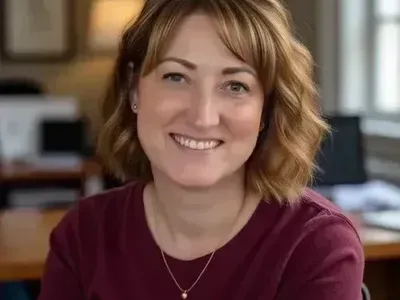
Nadine Mejia
LCSW, PMH-C
Nadine is a licensed clinical social worker who helps parents navigate postpartum depression, grief, and major life transitions in California, South Carolina, and Florida.
Licensed in CA, SC, FL

Natalia Cruz Navarro
LCSW
Natalia Cruz Navarro is a bilingual therapist who supports parents through pregnancy loss, birth trauma, and postpartum mental health challenges in California.
Licensed in CA
Real clients. Real relief.
What our clients say about their experience.
⭐⭐⭐⭐⭐
“I couldn't leave the house without checking the stove five times. Couldn't hand my daughter to anyone without a spiral of what-ifs. I thought I was going crazy. My therapist helped me understand what OCD actually is — not just being tidy, but a loop my brain got stuck in — and gave me tools to break the cycle. I'm not ruled by it anymore.”
— mom of 2
⭐⭐⭐⭐⭐
“I kept having thoughts of accidentally hurting my baby during bath time. I was convinced that meant I was dangerous, and I almost didn't tell anyone. My therapist explained that intrusive thoughts are the opposite of what you want — they show up because you love him and your mind is trying to protect him. That reframe saved me.”
— mom of 1
⭐⭐⭐⭐⭐
“My emergency C-section left me with nightmares and panic attacks. I couldn't talk about the birth without shaking. Therapy helped me process the trauma and reclaim my story. I'm pregnant again now, and I actually feel ready.”
— expecting mom of 1





Insurance accepted in California
- ✓Aetna / Meritain / CVS Health / First Health
- ✓Anthem / Blue Cross Blue Shield
- ✓Cigna / Evernorth
- ✓United Healthcare (UHC) / UMR / Surest
- ✓Optum / United Behavioral Health (UBH)
- ✓Magellan Healthcare
- ✓Oscar Health
- ✓Oxford Health Plans
We verify your benefits before your first session — most patients pay a standard specialist copay after their deductible. FSA and HSA eligible.
How it works
Book your free call
No commitment, no paperwork. Just a short call to tell us what you're going through and confirm we're the right fit.
Get matched
We pair you with the right specialist for your state and situation — and confirm your coverage before you commit.
Start your first session
Meet your therapist from home — no commute, no waiting room. Weekly or biweekly, adjusted to your life.
Common questions
- Intrusive thoughts are unwanted, disturbing thoughts that appear without warning — often violent or sexual in nature. In postpartum OCD, these typically involve harm coming to the baby. The key distinction: people with postpartum OCD are horrified by these thoughts and would never act on them. The thoughts are ego-dystonic (unwanted) — the opposite of intent.
- No. Research is consistent: parents who have intrusive thoughts about harming their baby are not at risk of acting on them. The presence of the thoughts, and the distress they cause, is a sign of anxiety — not danger. Effective treatment is available.
- Yes. Phoenix Health provides telehealth therapy to residents of California. Sessions are conducted via secure video from your home, office, or anywhere private — no commute required. All Phoenix Health therapists are licensed and authorized to practice in California.
- PMH-C (Perinatal Mental Health Certification) is awarded by Postpartum Support International (PSI) to clinicians who have completed advanced training in perinatal mental health — covering postpartum depression, anxiety, OCD, birth trauma, and related conditions. It represents the gold standard of specialization in this field.
- If you're struggling — with your mood, your thoughts, your relationship, or just how you're coping — that's enough of a reason to talk to someone. You don't need a diagnosis. A free consultation is a low-commitment first step.
Trusted by leading voices in perinatal health






Ready to talk about perinatal ocd & intrusive thoughts?
A free 15-minute call is the best place to start — no paperwork, no commitment. We'll confirm your coverage and match you with the right therapist.
Learning resources
🔁Read our Perinatal OCD & Intrusive Thoughts guides →Often goes alongside